


Alright, let’s talk about something you probably thought you knew since forever — how many days in a year. Spoiler: It’s not as straightforward as that “365” number your old math teacher drilled into your brain. Honestly, even I get tripped up on this sometimes. Like, wait, does that mean every year has the same days? Nope. That’s where leap years pop in and shake things up — kind of like an unexpected guest crashing your birthday party.
So buckle up. We’re diving into the weird, wild, and surprisingly human story behind how many days in a year, the normal ones versus the leap years, and some quirky facts that make you go “huh, I never thought of it like that.”
Why Do We Even Count Days in a Year?
Before you roll your eyes, hear me out.
I remember as a kid staring at the calendar, wondering why February always felt like the oddball with its fewer days. Like, why not just make it the same as the others? That confusion is pretty normal.
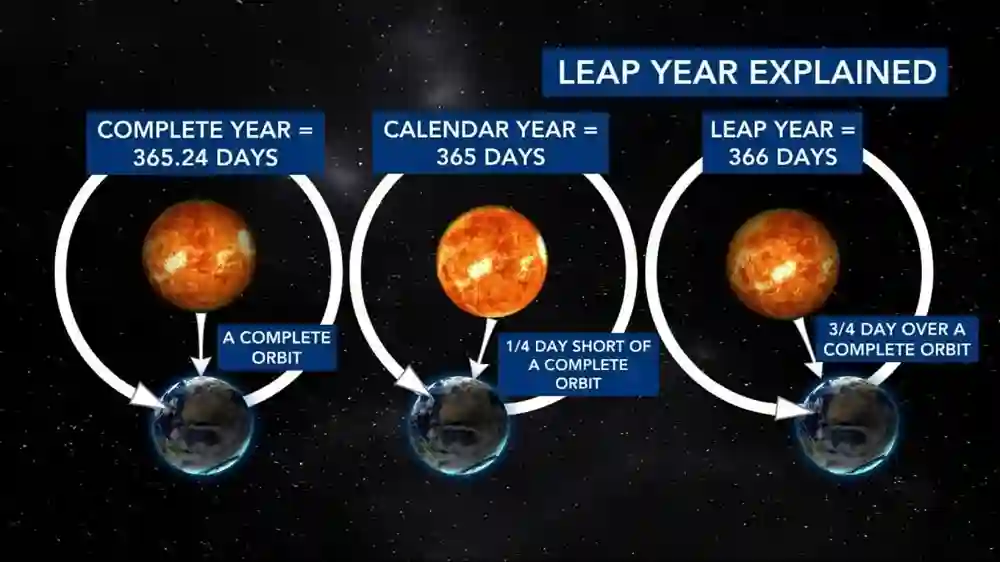
See, the whole idea of how many days in a year actually comes down to how long Earth takes to dance around the sun once. But here’s the kicker — it doesn’t take an exact number of days. It’s like trying to split a pizza evenly with your clumsy hands. The universe isn’t giving us neat, round numbers.
The Normal Year: The Classic 365 Days
Most years? They stick to 365 days. That’s the “normal year.”
- Why 365? Because that’s roughly how long Earth takes to orbit the sun.
- But I say “roughly” because the actual time is about 365.2422 days. Yeah, that decimal is important.
If Earth’s orbit was exactly 365 days, life would be a lot simpler. But nope, every year, that extra chunk adds up — like pennies in a jar until one day you gotta do something about it.
So, the normal year is a neat little package — 365 days. This is the calendar we live by most of the time.
What’s the Feeling of a Normal Year?
Honestly, it’s just regular. No weird hiccups, no bonus days sneaking in.
If you’ve ever planned something like a birthday or a vacation, normal years feel like the solid ground you walk on. You expect January 1st, and bam, there it is, no surprises.
Enter the Leap Year: The Extra Day Drama
Now here’s where things get spicy. Because of that extra 0.2422 days each year (which is about 6 hours, for the math geeks out there), the calendar slowly starts to drift from Earth’s actual orbit. Imagine if every year you added 6 hours to your day — after four years, you’d have 24 extra hours, or one full day!
To fix this, we have the leap year. It’s like the calendar’s way of saying, “Oops, I owe you a day!” And that day is February 29th.
What’s So Special About February 29th?
February 29th is like the sneaky little cousin who only shows up every four years. It feels kinda special, but also awkward because it doesn’t fit neatly anywhere else.
- People born on this day? They get to celebrate real birthdays only every four years. Talk about the ultimate “forever young” vibe.
- Some folks even joke it’s the perfect excuse to skip certain responsibilities, like paying bills… just kidding. (Well, maybe not.)
Why Not Add a Day Every Year Instead?
If you think adding one day every year sounds easier, you’d be right — but also, Earth’s orbit isn’t exactly 365.25 days. It’s slightly less, so if we just did a leap day every four years, we’d end up overshooting the mark.
So our calendar needs more rules to stay on track.
The Leap Year Rules: Not Just Every 4 Years
Here’s a little secret: leap years don’t just pop up every four years like clockwork. That would be too easy.
The rule goes something like this (brace yourself for some math-y talk, but I’ll keep it chill):
- A year is a leap year if it’s divisible by 4.
- BUT, if the year is divisible by 100, it’s not a leap year — unless…
- The year is also divisible by 400, then it is a leap year.
Say whaaat?
This means that 1900 was NOT a leap year, but 2000 was. I know, it sounds like a secret handshake for calendar nerds. It’s like the calendar playing a prank on us to keep things accurate.
The Weirdness of the Gregorian Calendar
All this leap year stuff came with the introduction of the Gregorian calendar in 1582.
Before that, people used the Julian calendar, which just added a leap day every 4 years, no questions asked. That was simpler, but it made the calendar drift out of sync with the seasons — which was a big deal for farmers back in the day.
Imagine planting your crops in what feels like spring, but it’s actually summer. That’d mess with dinner plans, not to mention the entire food supply.
Fun (and Odd) Historical Facts About How Many Days in a Year
I love this part. There’s some straight-up wild history behind the calendar and the days we count.
- Julius Caesar’s calendar reform: Legend says Julius Caesar asked an Egyptian astronomer for help to fix the messy calendar. The result was the Julian calendar, which had a leap year every 4 years, no exceptions. His calendar was like the OG for leap years.
- Calendar conspiracies? Some say the Gregorian calendar was invented just to mess with the common folks — like, “Let’s confuse people by skipping days!” No kidding, when it was introduced, 10 days were cut out to fix the drift. Imagine going to sleep on October 4 and waking up on October 15. Time travel, basically.
- The Soviet calendar experiment: For a brief, bizarre period, the Soviet Union tried using a calendar with five-day weeks, which meant days and dates were all jumbled. Can you imagine trying to remember birthdays on that?
So How Many Days in a Year, Really?
Alright, time to wrap up that burning question — how many days in a year?
- A normal year has 365 days.
- A leap year has 366 days.
Simple, right? But thanks to those little calendar tweaks, the real length of a year is about 365.2422 days. So the leap year rules help us keep everything aligned.
The Human Side of It: Why It Matters to Us
Sure, you might say “Who cares about an extra day?” but trust me, it’s more than just a random addition.
Think about holidays, birthdays, and even school schedules — they all rely on this system. Without leap years, our seasons would slowly shift, and we’d end up celebrating Christmas in the middle of summer. Now that would feel super weird.
I remember my grandpa always joking about his birthday — he was born on February 29th, and he said it made him feel “ageless.” Honestly, it sounded kinda magical when I was a kid.
Common Confusions About How Many Days in a Year
You’re not alone if you ever got tripped up by these.
- “Is every year divisible by 4 a leap year?” No, remember that century rule! 1900 fooled a lot of people.
- “What about time zones and daylight saving?” Those mess with hours, but not the total days. So don’t freak out.
- “Why is February so short?” Blame the Romans. Legend says February got the short end because it was the month for rituals and cleaning out the old year — so it got fewer days.
Weird Calendars Around the World
If you thought the Gregorian calendar was the only game in town, think again.
- The Mayan calendar was insanely complex and cyclical. It had cycles that could last thousands of years.
- The Ethiopian calendar is about 7 years behind the Gregorian one, and they have 13 months. Yep, 13! That’s straight up wild.
- In ancient times, calendars were linked to the moon phases or seasons. So the number of days in a year wasn’t always fixed.
Quick Recap — How Many Days in a Year?
Just so we don’t lose track amidst all the fun facts:
- Normal year = 365 days
- Leap year = 366 days (every 4 years, except century exceptions)
- Leap year rules keep our calendar synced with Earth’s orbit
- Calendars have changed a bunch over history, with some crazy experiments
- The exact length of a year is about 365.2422 days — not neat, but real
Why I Still Think Calendars Are Kinda Magical
Honestly, every time I look at a calendar, I’m amazed it works at all. It’s a human-made system trying to keep up with the universe’s rhythms — imperfect, messy, and full of weird exceptions.
I once tried planning a family reunion around a leap day. Spoiler: it was a pain. People were confused, birthdays got mixed up, and my cousin tried to claim he never ages. Classic.
Bonus: What If We Didn’t Have Leap Years?
Without leap years, our calendar would drift by about 6 hours every year. In 100 years, that’s 24 days off! Imagine celebrating New Year’s in the middle of fall. No thanks.
My Favorite Calendar Trivia
- Did you know that in medieval Europe, the new year sometimes started on March 25th, not January 1st? That’s like starting school mid-semester — confusing AF.
- The Romans once had a 10-month calendar and called the winter months “dead months.” Talk about neglect!
Wrote this paragraph by hand. Then spilled coffee on it. Classic.
Final Thoughts on How Many Days in a Year
So, yeah, the question “how many days in a year” might seem simple, but it opens up this whole world of history, astronomy, and human quirks.
Whether it’s a normal year or a leap year, each day counts — literally and figuratively.
Next time February 29th rolls around, remember it’s the calendar’s way of keeping us in sync with the cosmos, even if it feels like an extra weird bonus day.
Reminds me of that scene from House of Leaves, spooky stuff about time and space bending — only with less creepy basements.